
If you have ever looked online for information on alt text, you will have likely found several prescriptive rules, an itemized list telling you not to use “image of” or an empty value (alt=""). While these are good for finding problems with existing alt text or telling you what not to write, they don’t really show you what to write. Images often carry the meaning of the prose, and a list cannot help with that. It requires editorial judgment. And for this reason, AI alt text cannot reliably place an image within the context of an article unless there is sufficient context provided, and even then, it often comes up short.
Consider an image repurposed across different publications. Well-polished alt text should be different depending on the article. This is because it doesn’t describe the image itself, but rather, it tells what the image is doing in relation to the words.
Same Image, Different Job
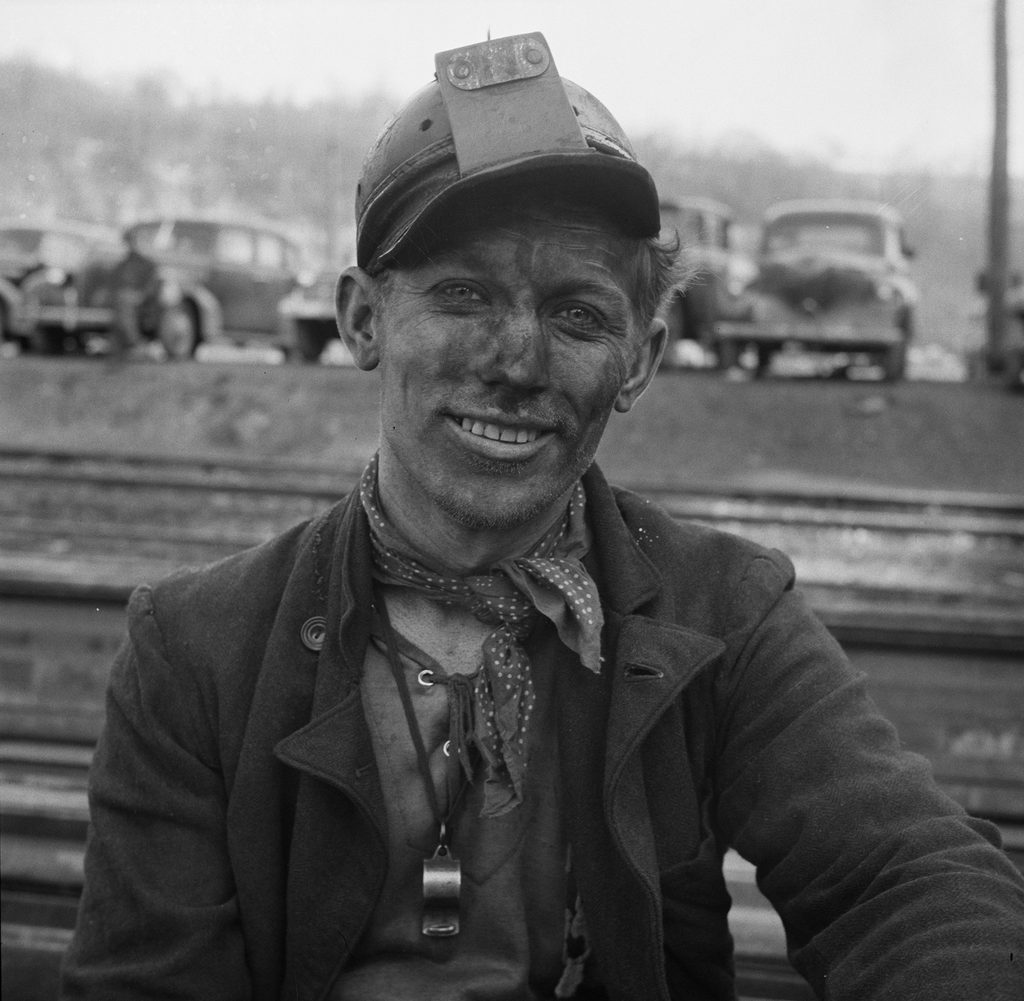
For the example image above, consider the following:
In an article on occupational health, the dust on the miner’s face is more important than the person himself. The dust is the subject. Alt text might look like this: Miner at the end of his shift, coal dust covering his face and neck, helmet lamp bracket still fitted.
If the same image were to be in an article on documentary portraiture, the pose is the most relevant subject and the dust is the background, so the alt text may come out as this: Miner smiling directly into the lens, shot tight, the studio-portrait convention transplanted to a pit head.
Both alt text examples illustrate how alt text depends on context. Contrast those to AI-generated alt text: Black-and-white portrait of a smiling Pennsylvania coal miner wearing a helmet and work clothes, with coal cars and vehicles visible in the background. The photograph was taken in 1942.
While the information in the AI version is accurate, it is simply an inventory of what is in the image, giving no editorial relevance to any particular article. A good practice would be to ask yourself before you write, “What is the image doing here?” The answer will help guide you in the right direction.